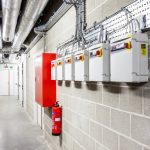
Here’s a scenario we run into constantly. A property manager calls us because they just got a violation notice, and when we ask what happened, it’s almost never something dramatic. It is an extinguisher tag that expired back in the spring. A pallet of boxes that’s been sitting in a hallway so long nobody registers it as a problem anymore. A fire safety inspection checklist that existed on paper somewhere but had not actually been walked through in over a year. That gap is where most fire code trouble starts in California, and with enforcement tightening across LA and the rest of the state heading into 2026, it is worth closing that gap now rather than after the fact.
So, this is meant to be a working guide. What inspectors check. Where buildings usually mess up. What to do about it before someone with a clipboard finds it first.
Why 2026 is a bit different
California’s fire code isn’t new or unusually harsh, but it does get enforced seriously, and there’s a reason for that. Older commercial buildings, dense occupancy in a lot of urban corridors, a state that lives with fire risk in a way most don’t. None of that is changing. If you want the legal backbone behind all this, we have laid it out in the California Fire Safety Compliance Regulations for Businesses guide. What follows here is more practical. Less code language, more “what actually happens when the inspector walks in.”
What fire inspection requirements in California really boil down to
Every city and county tacks its own amendments onto the state fire code, so the specifics shift depending on where your building sits. But strip it down and inspectors are basically asking three things. Can people get out safely. Will the suppression systems actually work, not just pass a test once a year and get forgotten. And has anyone been keeping up the required systems at all.
A commercial kitchen gets judged on a completely different set of specifics than a leasing office does, even though the underlying logic is the same for both.
The checklist
Not everything here applies to every building; a small single-story retail space doesn’t need a Fire Life Safety Director, for example. But most of it should be routine if you are managing commercial property in this state.
Fire extinguishers
- Mounted somewhere visible and reachable, not tucked behind a door or a stack of boxes
- Tagged and inspected within the last 12 months
- Rated for what is actually in that space, a kitchen extinguisher isn’t the same as what you’d want next to a server rack
Exit paths and signage
- Exit signage lit and visible without anyone having to squint for it
- Hallways and stairwells actually clear, not “clear enough,” no boxes, no furniture that migrated there during the last office move and never left
- Doors along the egress path open without a key, a code, or knowledge that you have to jiggle the handle a certain way
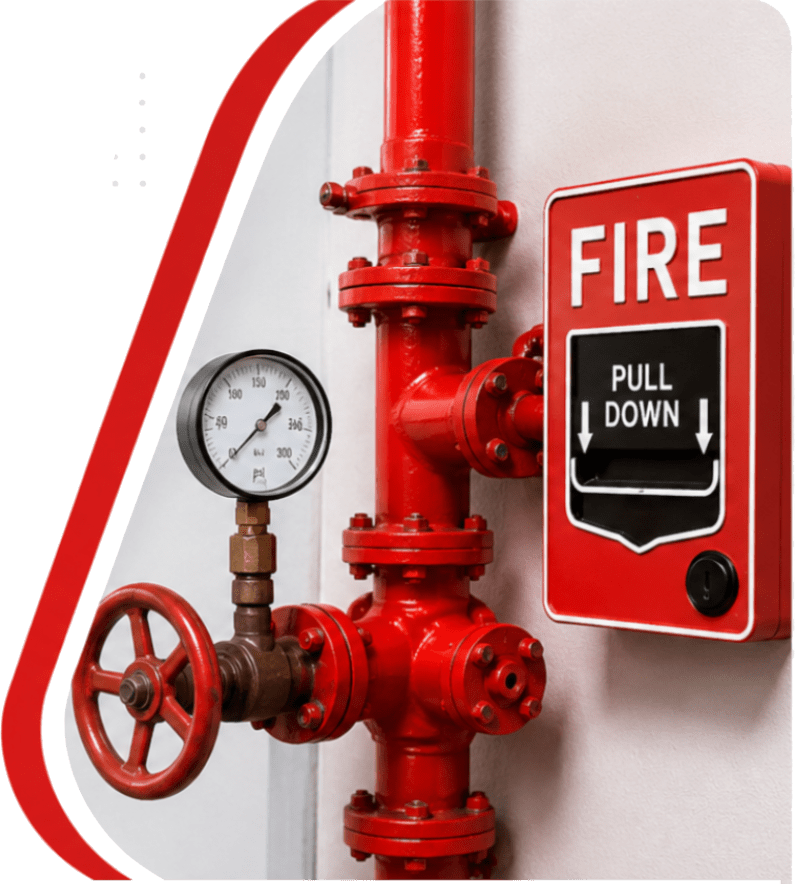
Fire alarm systems
- System tested and certified, with paperwork you can produce on request (not buried in an email from three years ago)
- Pull stations reachable, not blocked by a filing cabinet someone moved in front of it
- Notification devices covering every space, even areas added or repartitioned after the original install
Sprinkler systems
- Annual testing current
- Five-year requirements under NFPA 25 up to date see our Reg 4 Testing and Annual Inspections guide if you inherited a building’s fire systems rather than set them up yourself
- Sprinkler heads unobstructed, with at least 18 inches of clearance below each one
Emergency and exit lighting
- Battery backups tested, not just installed and forgotten
- Fixtures confirmed working during an actual power-off test, not assumed fine because the bulb looks new
Electrical
- No overloaded outlets or daisy-chained power strips
- Three feet of clear space in front of every electrical panel
- No exposed or improvised wiring standing in for permanent fixes
Storage and housekeeping
- Combustible materials kept away from heat sources
- Nothing stacked within 18 inches of a sprinkler head
- Storage kept out of egress paths and stairwells
Fire doors and rated assemblies
- Doors self-close and latch on their own
- No wedges, chairs, or anything propping a fire door open, even “just for a second”
High-rise and life safety planning
- Designated Fire Life Safety Director on file where required
- Evacuation plan that staff can actually explain, not just a sign laminated to the wall since the building opened
Office buildings need a slightly different lens
Offices carry their own version of fire risk that doesn’t always show up on a generic checklist. Open floor plans change how smoke moves. Break rooms with microwaves and coffee makers introduce small hazards that add up. Server rooms need different suppression entirely, since water damage can wreck the equipment almost as fast as fire would. Conference rooms get rearranged all the time, and furniture ends up blocking an exit path without anyone noticing until it’s a problem.
Multi-tenant buildings are where it gets genuinely messy. One tenant’s storage habit can create a violation the property owner ends up responsible for, not the tenant who caused it. If you are overseeing several leases in one building, fire compliance can’t really be a once-a-year task anymore; it needs active coordination. We wrote more on how to structure that in fire protection for property management if that’s the situation, you are in.
The violations we see over and over
Almost none of this is negligence, honestly. It’s maintenance gaps that quietly turn into problems. But the same short list keeps showing up: expired extinguisher tags, exits blocked or locked for “security” reasons, sprinklers past their testing window, storage crowding that eighteen-inch clearance rule, extension cords doing a permanent wiring job, alarm panels sitting on an unresolved trouble signal that somebody decided could wait.
None of it is expensive to fix. It just needs someone to notice before the city does.
Fire inspection in Los Angeles
Buildings in LA fall under the LAFD’s Fire Prevention Bureau, which adds its own layer on top of the state code. High-rises, assembly spaces like theaters and event venues, anything with a commercial kitchen, these tend to get more frequent attention.
Most inspections follow a routine schedule, but a complaint, a permit for renewal, or a change in how the space gets used can trigger a visit with no warning at all. LAFD inspectors are particular about paperwork. If extinguisher tags, alarm records, and sprinkler certifications aren’t organized and easy to hand over on the spot, what should be a quick routine check turns into a long afternoon.
Fire inspection cost in California, and what actually moves the number
There’s no single answer here, and anyone who gives you a flat number without knowing your building is guessing. Cost depends on the size and occupancy type of the building, since a small office suite and a fifty thousand square foot warehouse are not the same job. It depends on whether it’s a routine annual check versus something bigger, like a five-year sprinkler certification. Local jurisdiction fees vary more than people expect, sometimes between two cities that are a ten-minute drive apart. And if violations turn up, re-inspection adds its own cost on top.
The base municipal fee is usually predictable. What isn’t predictable is the remediation after. That’s really the financial case for staying ahead of your own checklist. Fixing a blocked exit yourself takes a few minutes. Having an inspector finds it can mean fines, a forced re-inspection, and in the worst cases an order to shut part of the building down until it is resolved.
Make it routine, not an event
Buildings that pass inspection year after year without drama tend to share one habit: someone treats this as ongoing, not seasonal. That usually means a person walking the property regularly with a list like this one, records that are actually easy to find, and a fire protection company handling testing before small issues become citations.
If you’d rather hand that off, that’s the work we do. MG Fire handles sprinkler and alarm testing, compliance audits, and general fire safety upkeep for property owners and managers across California, with the goal that your next inspection is boring instead of stressful.
Get the habit right, and the checklist stops being something you dread. It just becomes part of running the building.